
Equilibrar la luz para crear confort. La luz y el Sol forman parte de nuestra vida. Nos conectan con el exterior, llenan los espacios de energía y nos ayudan a disfrutar más de una terraza, una fachada, un balcón o un jardín. Pero cuando no se regulan bien, también pueden traer exceso de calor, deslumbramiento o una sensación de incomodidad que nos obliga a refugiarnos dentro.
Choosing an awning fabric isn’t just about picking a nice colour. It’s about deciding how we want to experience light. How much light we let in. How much heat we want to keep out. What level of privacy we need. And what we want our outdoor space to look like.
At Saxun, we see sun protection as a way of enhancing spaces to improve the quality of life. Every home, business, terrace or project has its own unique character, and each requires a different kind of shade: cooler, brighter, more discreet, more technical or more decorative. Choosing the right awning fabric is the first step towards achieving this.

When choosing a canopy fabric, colour matters. A lot. But it shouldn’t be the only factor.
A good tarpaulin helps to control solar radiation before it reaches the glass, the pavement or the surface we want to protect. This reduces heat gain, softens the light and creates a more pleasant atmosphere for more hours of the day.
The aim is simple: to provide shade without sacrificing outdoor living. To make the right choice, it is worth considering three factors:
Every ray of sunlight that hits a façade, a window or a terrace carries energy. When that energy enters a space unchecked, it can raise the indoor temperature, cause glare and make us more reliant on air-conditioning systems.
An awning fitted to the outside acts as a first line of defence. The fabric blocks some of that radiation before it reaches the building envelope, helping to control heat, visible light and UV radiation.
To understand this better, it is worth distinguishing between three types of solar radiation:
Infrared rays: are the ones we mainly perceive as heat. In this case, the colour of the canvas has a significant influence. Dark shades tend to minimise solar transmission more effectively, although they absorb more energy and can radiate more heat if they are very close to people. Light colours, on the other hand, reflect more radiation and absorb less, but may let through more light and solar energy, depending on the fabric.
Visible light: It is the part of the solar spectrum that we can see. Dark colours block more light and cast a deeper shadow, whilst light colours allow more light through and create a visually lighter atmosphere.
Ultraviolet rays: They are invisible to the human eye and can affect not only the skin but also materials, furniture and textiles exposed to the sun.
In acrylic fabrics such as Masacril, one of the ranges offered by our fabric supplier Sauleda, UV protection is categorised according to the colour of the fabric. According to Sauleda, its Masacril awnings block 99% of UVA rays, whilst protection against UVB rays is classified as UV40, UV60 or UV80, depending on the shade chosen.
.png)
When the sun hits the canvas of an awning, Energy does not always behave in the same way. Some may pass through the fabric, some may bounce off the outside, and others may become trapped within the canvas itself.
These three behaviours They explain why a tarpaulin provides more or less protection from the heat, lets more or less light through, or creates a deeper shade.
Broadcast. This is the proportion of solar radiation that passes through the fabric. The higher the transmission of a awning, the more light and solar energy will reach the shaded area. In practice, this can result in a brighter environment, but also in a greater sensation of heat if there is strong sunlight.
Reflection. This is the portion of radiation that bounces off the surface of the awning and is reflected back outwards. An awning with good reflective properties helps to reduce the amount of energy reaching the area it covers. This is particularly useful when seeking cool shade and effective sun protection without making the area too dark.
Absorption. This is the portion of radiation that the fabric absorbs and converts into heat. Some fabrics absorb more energy than others, depending on their composition, colour and finish. With external awnings, this is an important point: although the fabric may heat up, most of that heat remains outside the home or building. This is why external protection is so effective at preventing the interior from overheating.
The key lies in striking a balance between these three values. There is no single ‘perfect’ awning. There is a suitable awning for every way of enjoying the light.
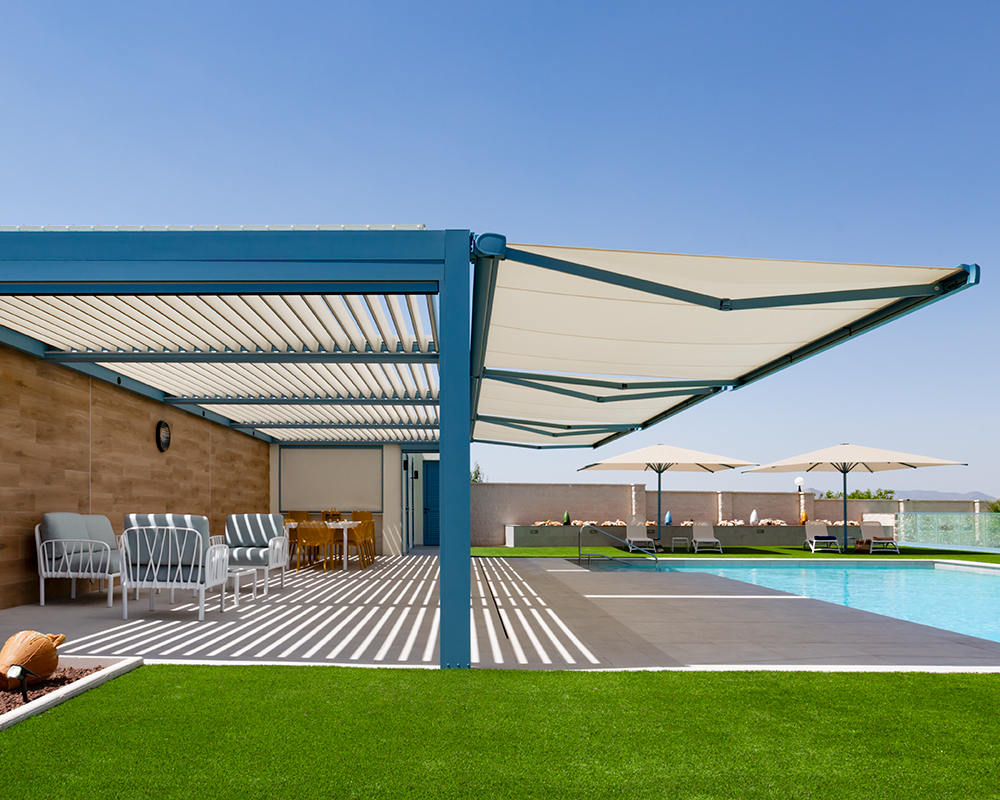
The colour of the fabric affects not only the appearance but also the way in which the awning manages light and heat.
Dark tarpaulins
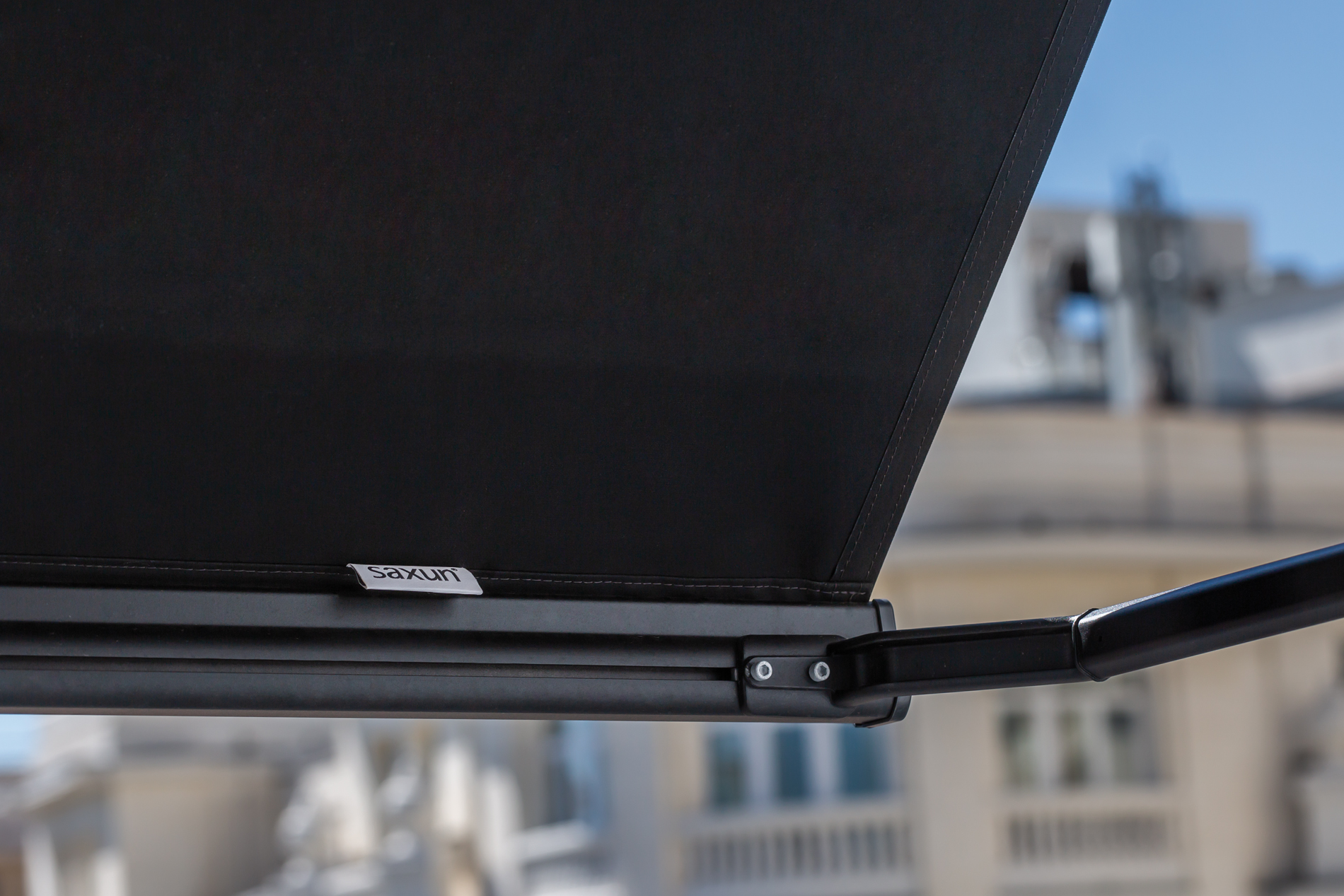
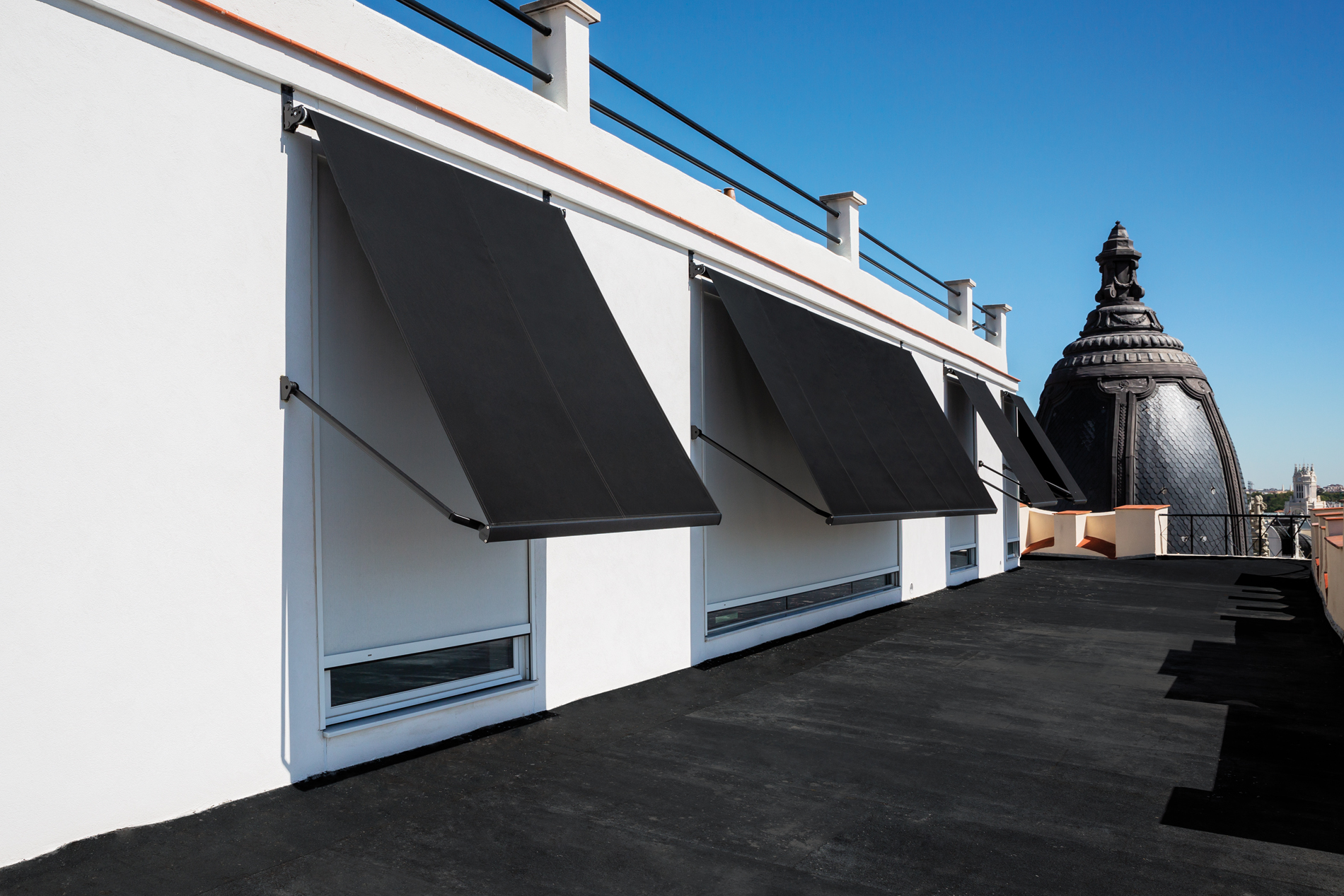
Dark tarpaulins tend to be more effective at blocking direct light. They create a deeper shade and help to control glare, which is very useful in areas exposed to intense sunlight or where people wish to rest, eat or work without visual disturbances.
They also absorb more solar radiation, which means the fabric can become hotter. However, with an external awning, much of that heat remains outside the building envelope. This makes them an attractive option for windows, terraces or façades where you want to limit heat gain and improve indoor comfort.
From an aesthetic point of view, dark colours add presence, contrast and a more elegant feel. They work very well in contemporary architecture, businesses with a polished image, or spaces where the awning forms a visible part of the exterior design.
Light-coloured tarpaulins
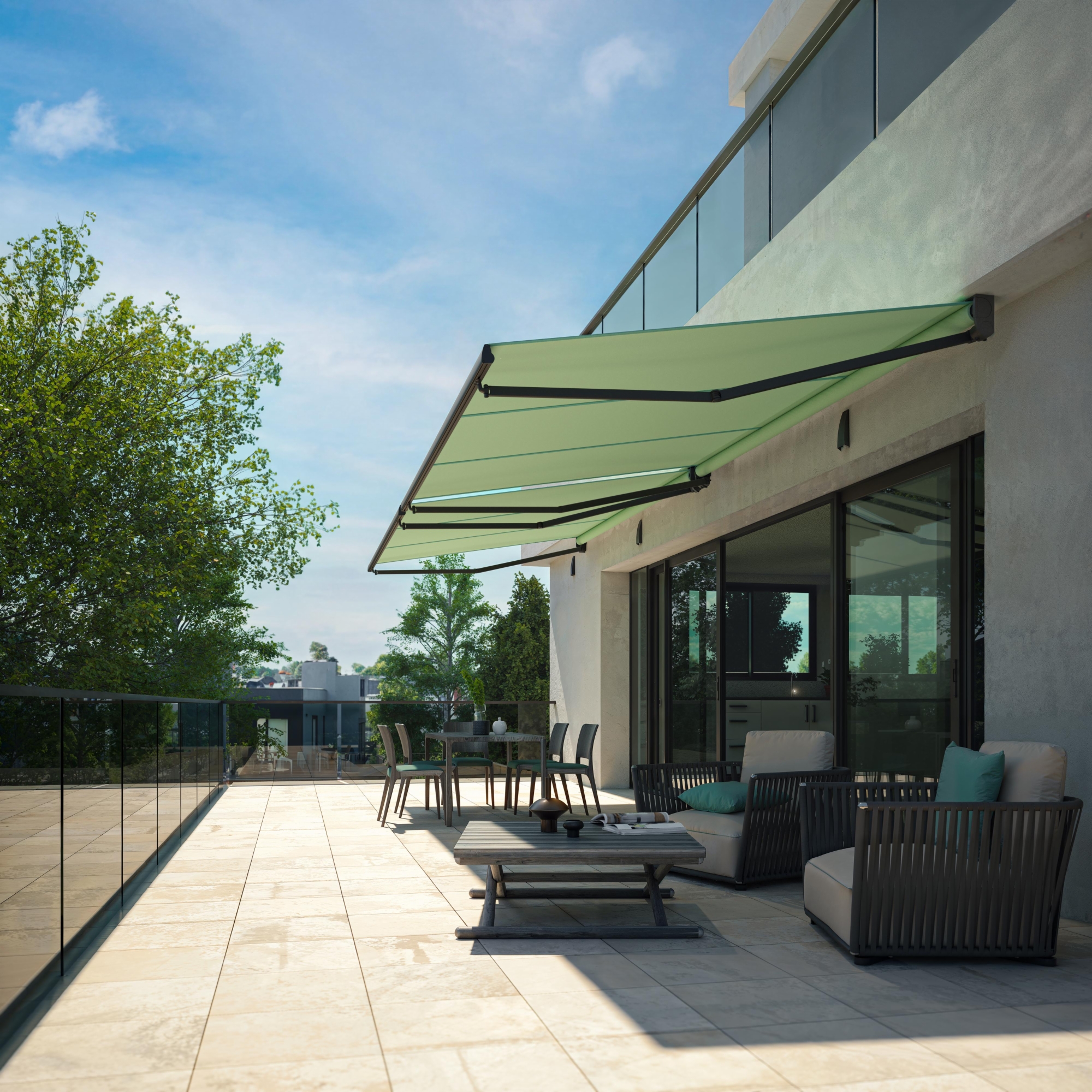
Light-coloured awnings reflect more light and help to create visually brighter spaces. The shade they cast tends to feel lighter, which can be very pleasant in courtyards, small balconies, family terraces or areas where you don’t want to lose any light.
They are a good choice when the aim is to provide protection from the sun without darkening the space too much. They also complement light-coloured façades, Mediterranean-style homes or settings where a fresh, natural and open feel is desired.
EIn areas with high levels of sunlight, it is advisable to consider the type of fabric and its performance characteristics, not just the colour. A light shade can bring in light, but the level of protection will also depend on the fabric’s composition, its density and how it behaves when exposed to radiation.
Canvases in neutral colours
Shades of sand, stone, soft grey, taupe or earth tones usually offer a good balance between protection, light and aesthetic harmony. They are versatile, complement many façades well and provide a pleasant shade without making the surroundings feel harsh.
The best choice depends on how the space is used, its orientation, the architectural style and the atmosphere you wish to create.
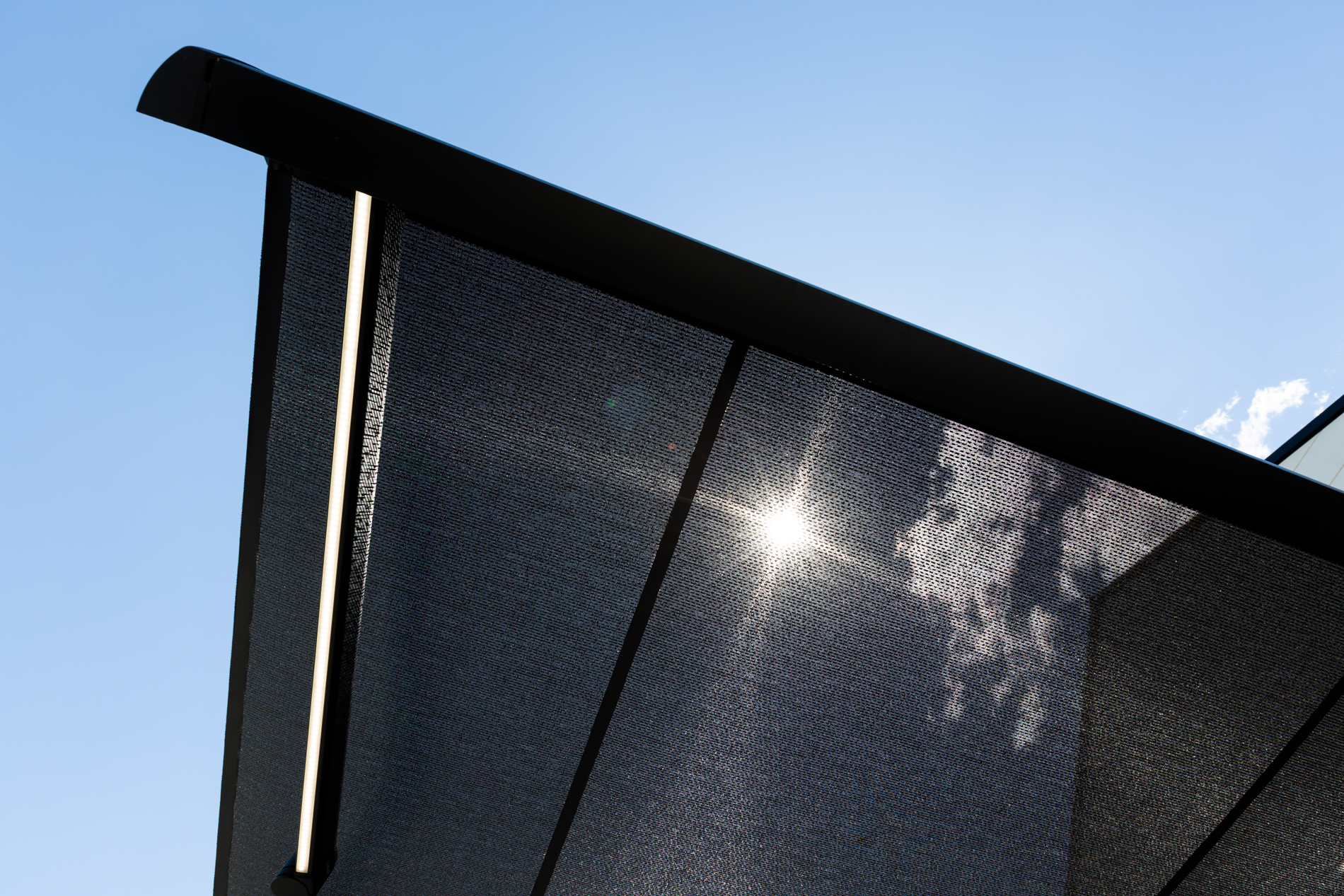
In technical fabrics such as Screen, the open area ratio is an important factor.
This figure indicates the percentage of open area in the fabric. In other words, it is the proportion of small openings that allow light to pass through and provide a view of the outside.
A screen mesh can have different open area ratios, for example 1%, 3% or 5%.
The lower the aperture ratio, the greater the protection against glare and the greater the privacy.
The higher the aperture ratio, the more visible light enters and the better the view to the outside is maintained.
This approach is very useful when you want to balance four requirements at the same time: clarity, privacy, views and visual comfort.
.jpg)
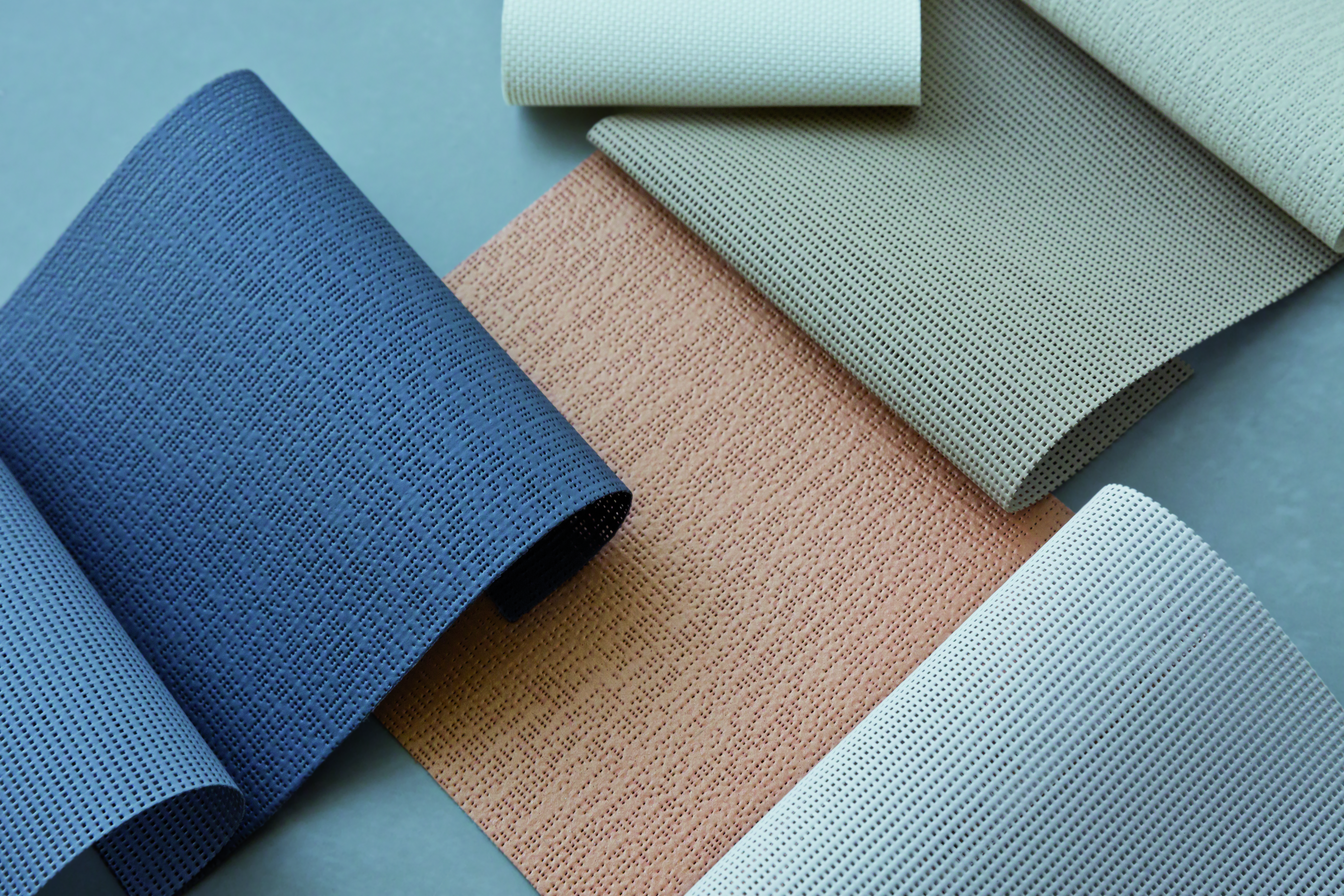
At Saxun, we offer a wide range of outdoor fabrics designed to tailor each solution to homes, terraces, restaurants, hotels, shops and commercial premises.
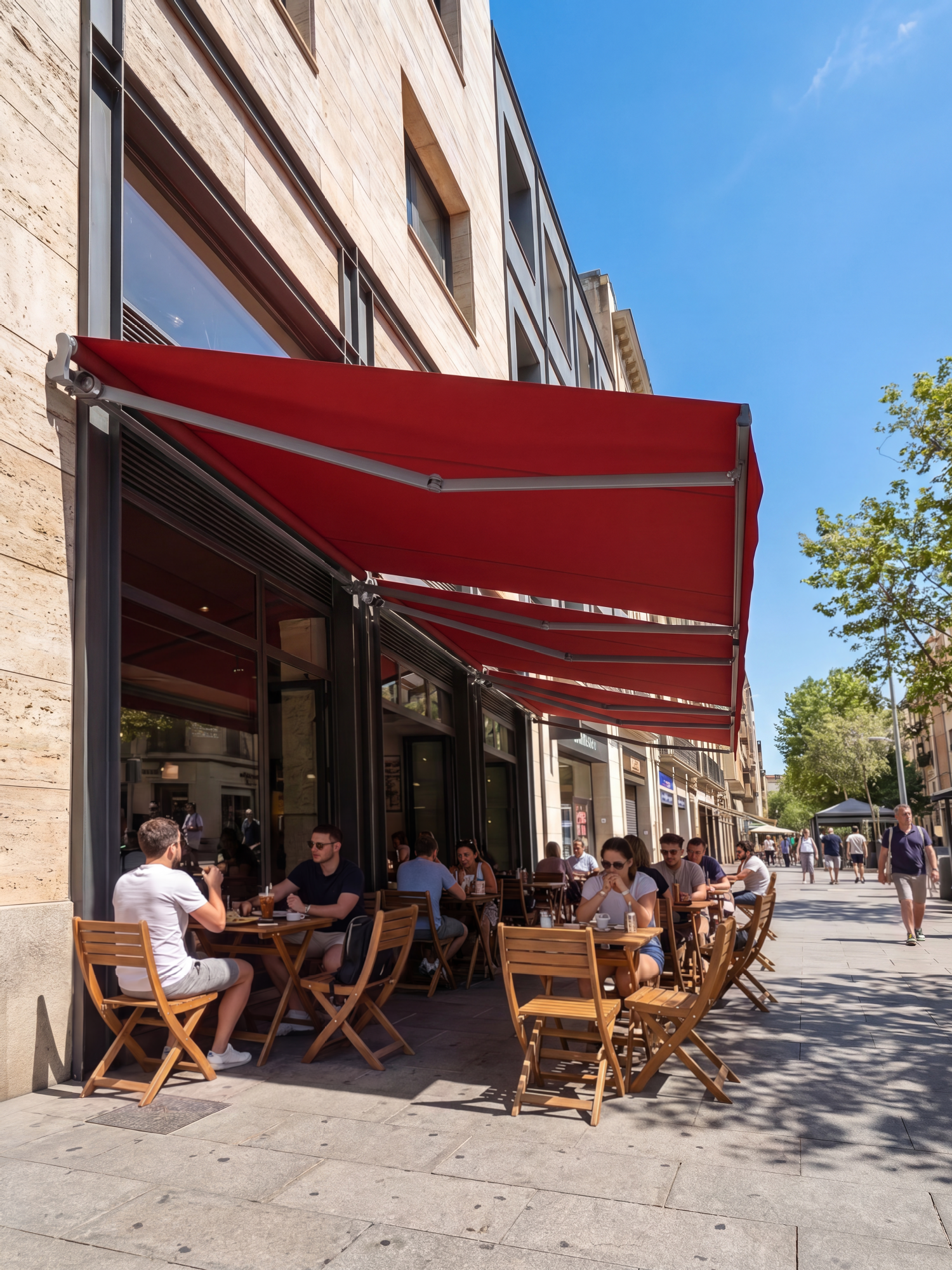
The choice should not be based solely on ‘which awning looks best’, but on how the space is going to be used. A south-facing restaurant terrace does not require the same solution as an urban balcony, a seaside home or a hotel chill-out area.
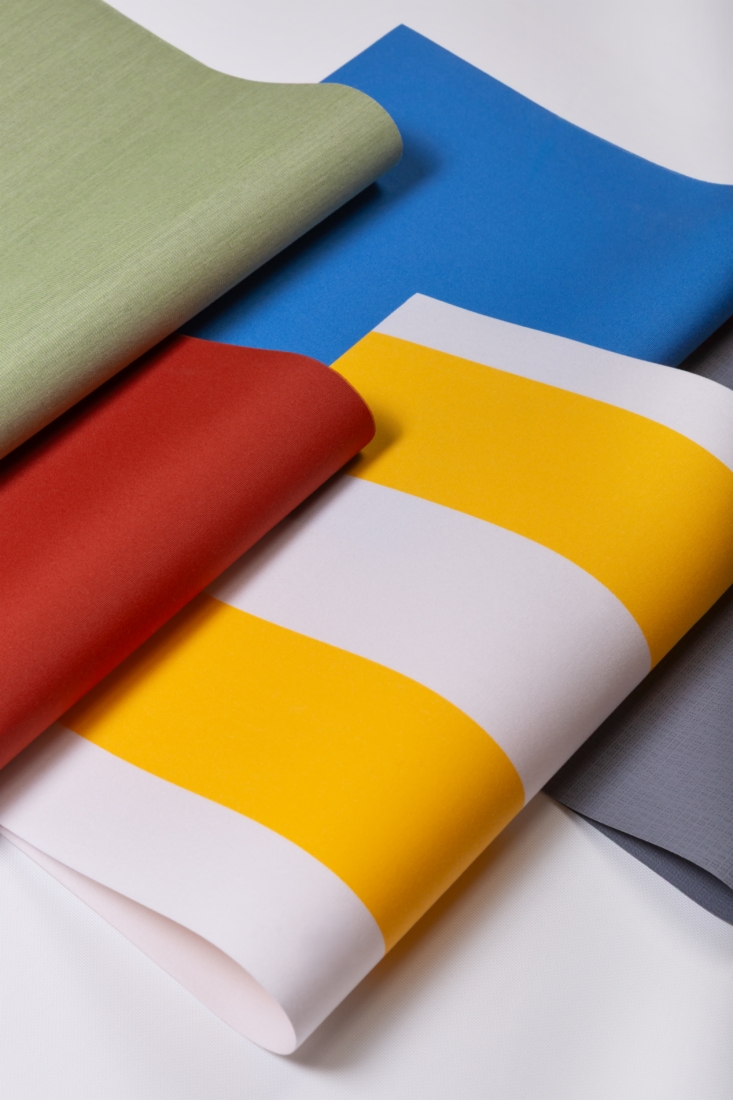
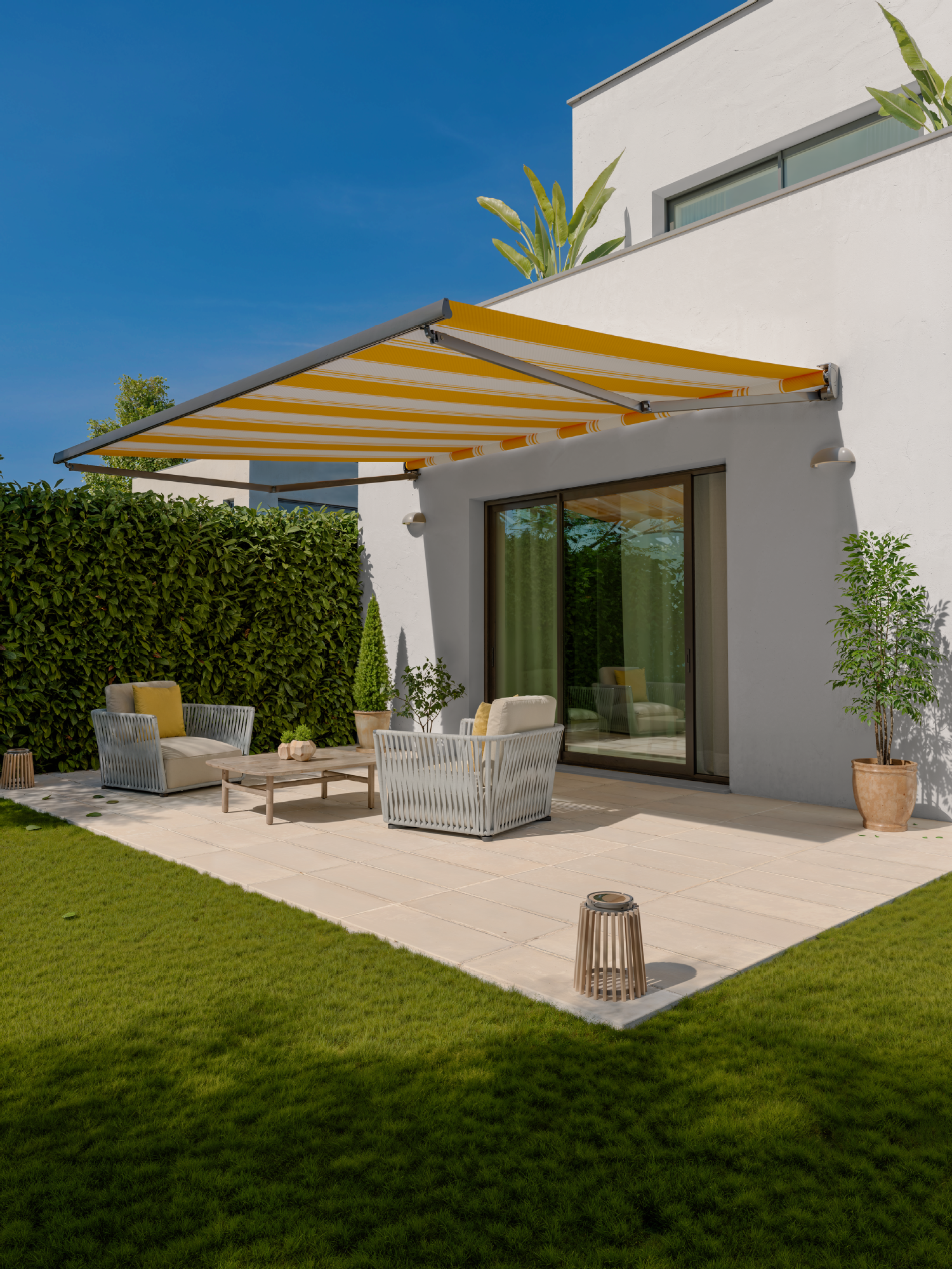
Striped acrylics: character and design for the façade
The striped acrylics add character. Their designs can be classic, Mediterranean, contemporary or more daring, depending on the atmosphere you wish to create.
They are a good choice when the awning forms a visible part of the façade and you want to enhance the character of the space. In a home, they can add warmth and style. In a shop, café or hotel, they can help make the terrace or entrance more recognisable from the outside.
Soltis fabrics: technical protection and high performance
Soltis fabrics are technical fabrics designed for indoor and outdoor sun protection applications.
Depending on the model chosen, they can provide a view to the outside, protection from the heat, weather resistance, greater privacy or even complete opacity. There are perforated, waterproof and opaque versions available, allowing the solution to be tailored to projects with more specific requirements.
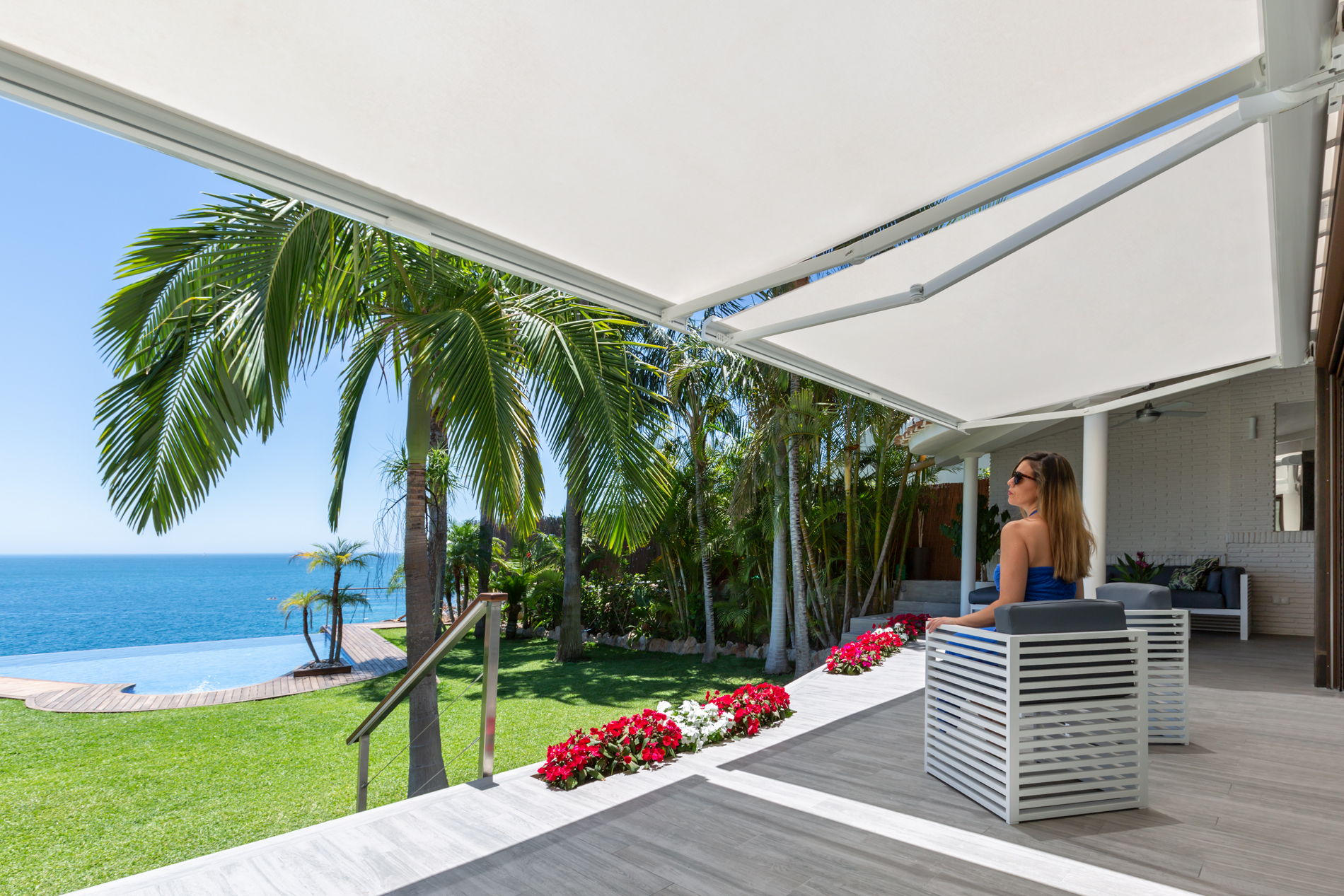
Too much sun doesn’t just make it hot. It can also cause glare, strain the eyes and make a space uncomfortable at certain times of the day.
A well-chosen awning helps to create a softer light. It reduces the intensity, softens contrasts and makes it more comfortable to use the terrace, the porch or the interior of the home.
At Saxun, we offer you a world of fabrics, colours, textures and solutions so that every space can find its own shade. Because when shade is well designed, it makes a real difference to your wellbeing.
1. Note the orientation of the space
A south-facing façade does not receive the same amount of sunlight as a west-facing terrace. The orientation determines the intensity of the light, the hours of exposure and the perceived temperature.
2. Decide what you want to improve
You may need to reduce heat, provide shade, prevent glare, protect furniture, maintain views or enhance the aesthetics of the space.
3. Consider the type of fabric
Acrylic, striped acrylic, screen fabric or technical fabric. Each option reacts differently to light, heat, privacy and everyday use.
4. Choose your colour with care
Light colours bring more brightness. Dark colours help to control glare more effectively. Medium colours offer a balance and blend in easily with many façades.
5. Bear privacy in mind
For screen fabrics, check the open area ratio. A lower percentage offers more privacy; a higher one provides a better view.
6. Think about the bigger picture
The banner must blend in with the façade, the furniture, the surroundings and the way in which the space is used.
7. Seek advice
A professional can help you make the right choice based on the intended use, dimensions, fabric, colour and awning system.
 You may also like
You may also like
You may also likeContact us, we will be happy to help you