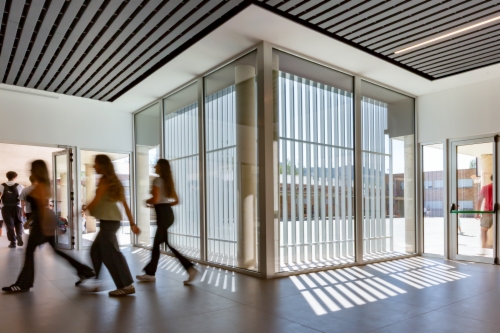
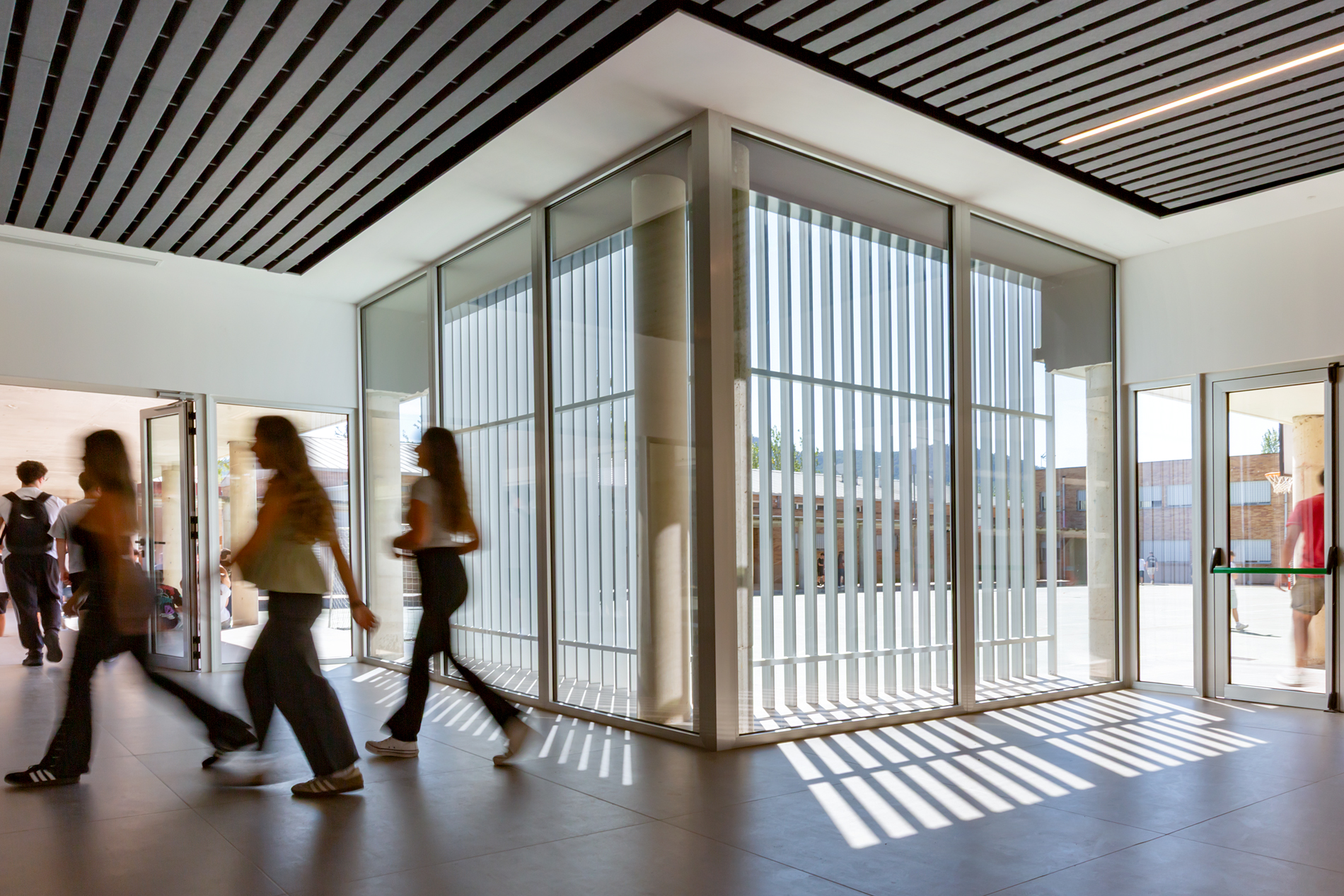


Integrating solar protection solutions from the design stage not only improves thermal comfort and natural light management in classrooms, but also reduces energy consumption and promotes healthier and more sustainable learning environments.
Sun protection in educational spaces has become a strategic element in contemporary architecture. In a context of climate change and rising temperatures, ensuring thermal comfort and proper management of natural light in schools, colleges and universities is no longer an optional improvement, but a structural necessity.
At Saxun, we believe that wellbeing begins with design, which is why we understand that the environmental quality of classrooms is crucial to creating healthy and sustainable educational environments.
The current stock of educational buildings in Spain has significant shortcomings in terms of energy efficiency and solar control. Many centres were built without integrating passive shading strategies, which today translates into overheated classrooms, higher air conditioning consumption and reduced comfort and concentration.
Given this scenario, it is essential to integrate dynamic solar control solutions from the design phase onwards, both in new builds and refurbishments.
Together with the Spanish Association for Shading and Dynamic Solar Control (AESSO), of which we are founding members, we would like to highlight one of the most important studies in this field.
Research conducted by the University of the Basque Country on the potential of solar shading in educational buildings analyses the impact of passive solar protection strategies as a tool for reducing energy demand and improving indoor comfort.
The simulations also estimate a decrease of between 2°C and 4°C in the interior temperature, depending on the orientation of the classrooms, during the hottest days.
These data confirm that efficient solar shading not only improves well-being, but also significantly reduces the energy and economic impact of educational centres.
With over 65 years of experience, at Saxun we develop enclosure and solar protection solutions designed to create comfortable, efficient spaces that are adapted to the current demands of educational architecture.
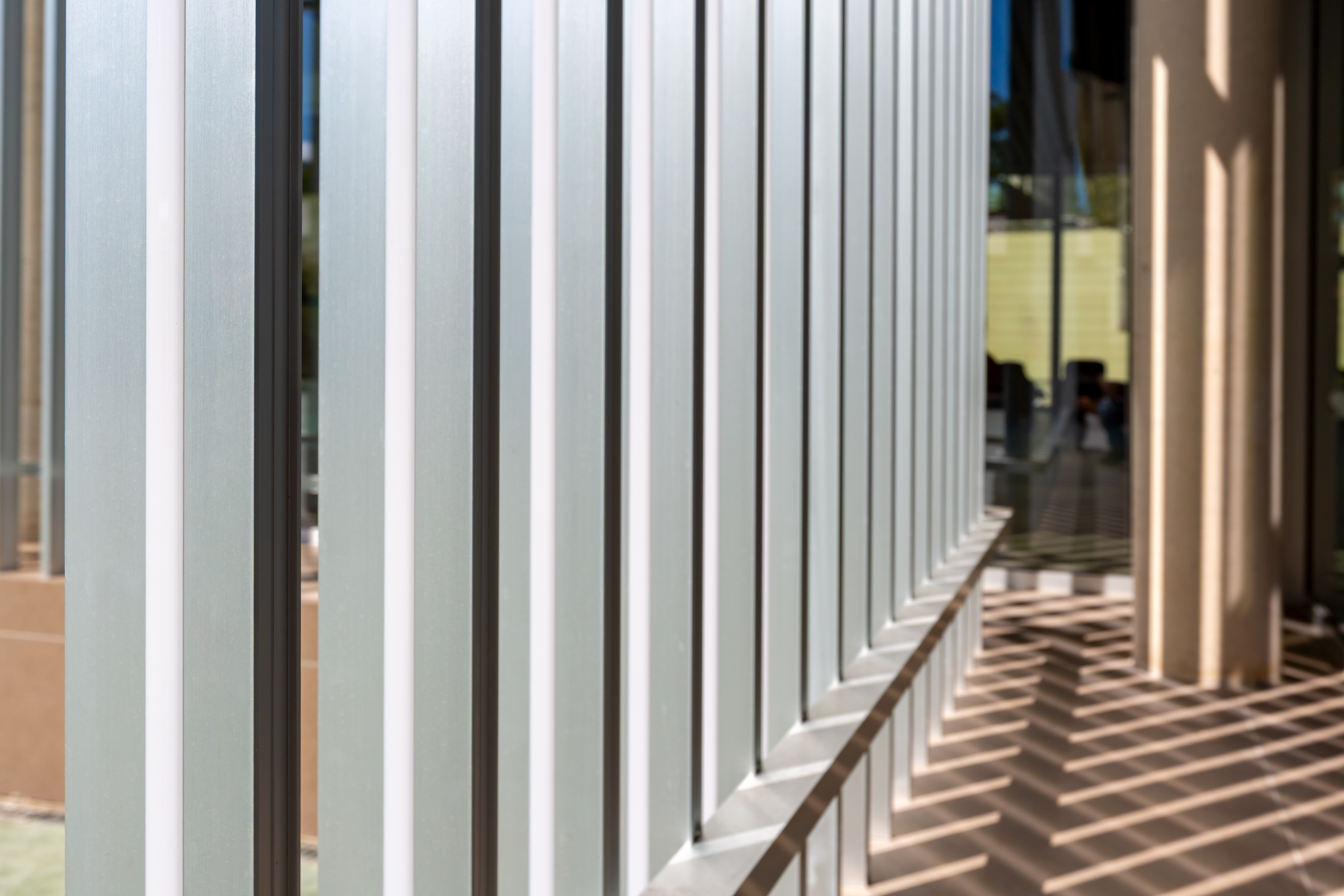
Two of the most widely implemented solutions in educational centres are Wind Screen ZIP systems and architectural louvers.
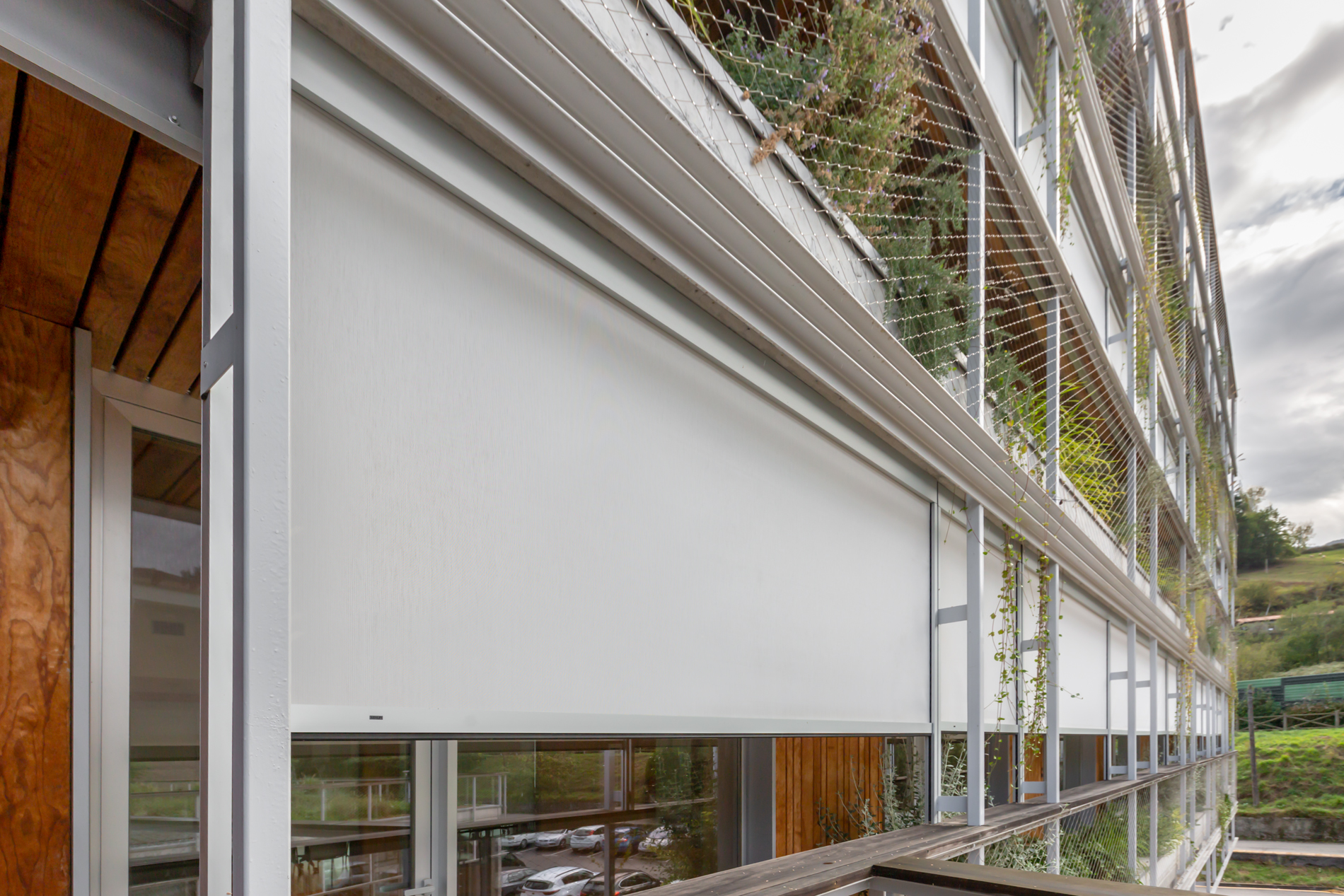
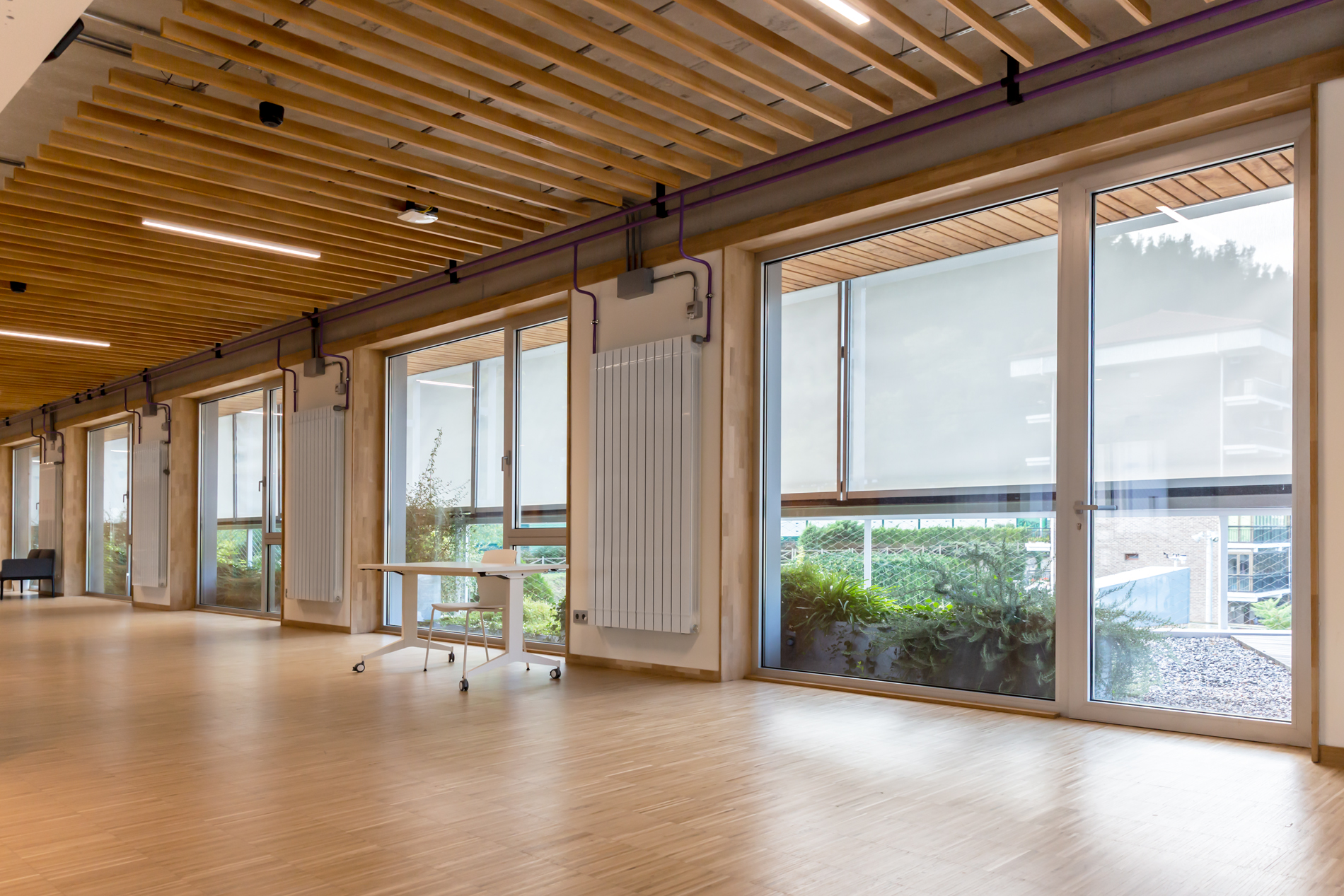
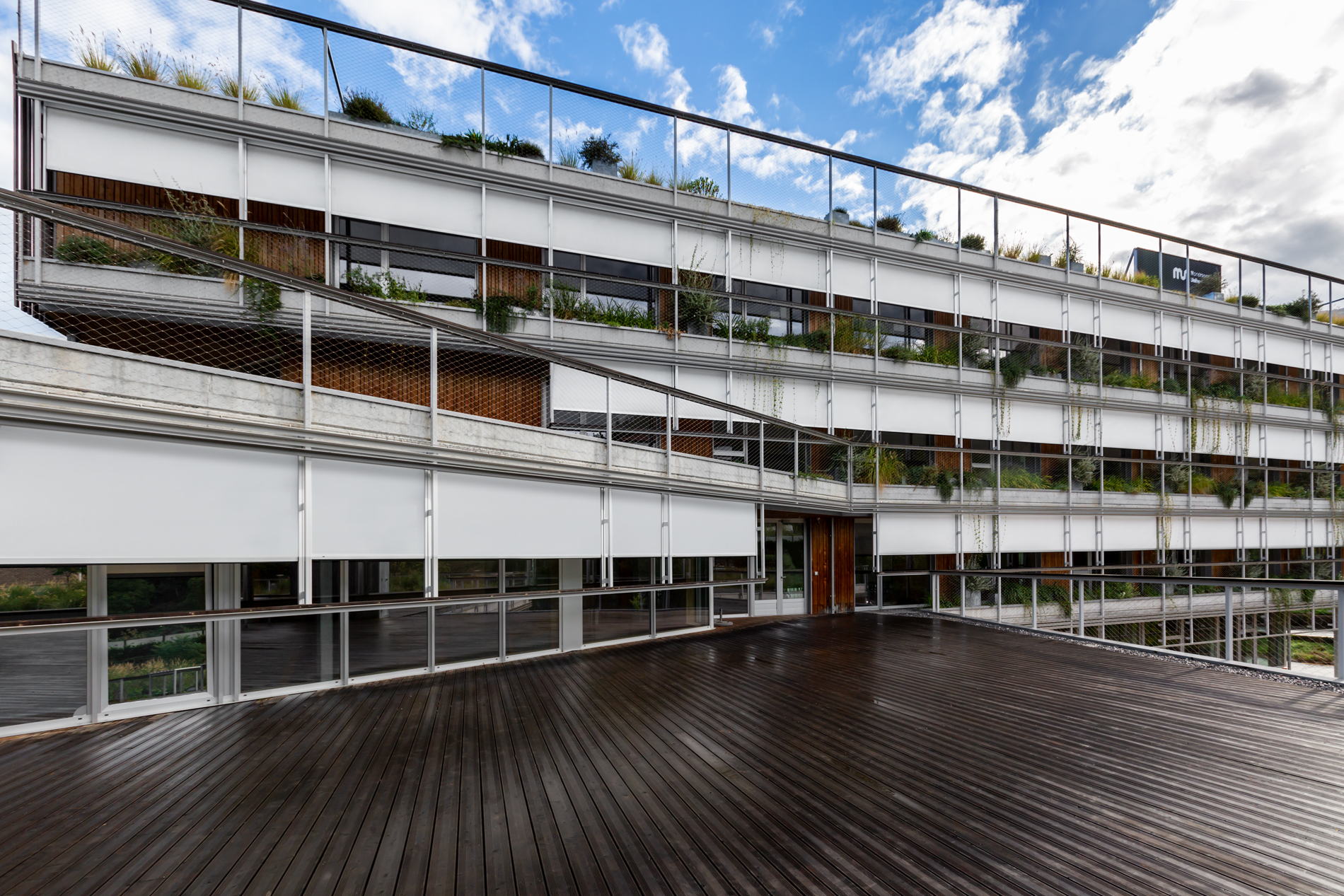
The installation of 51 Wind Screen ZIP systems at the Faculty of Humanities and Education Sciences in Eskoriatza (University of Mondragón, Guipúzcoa), a project recognised at the 2021 Spanish Architecture and Urbanism Biennial (BEAU), is an example of how solar control can be successfully integrated into university architecture.
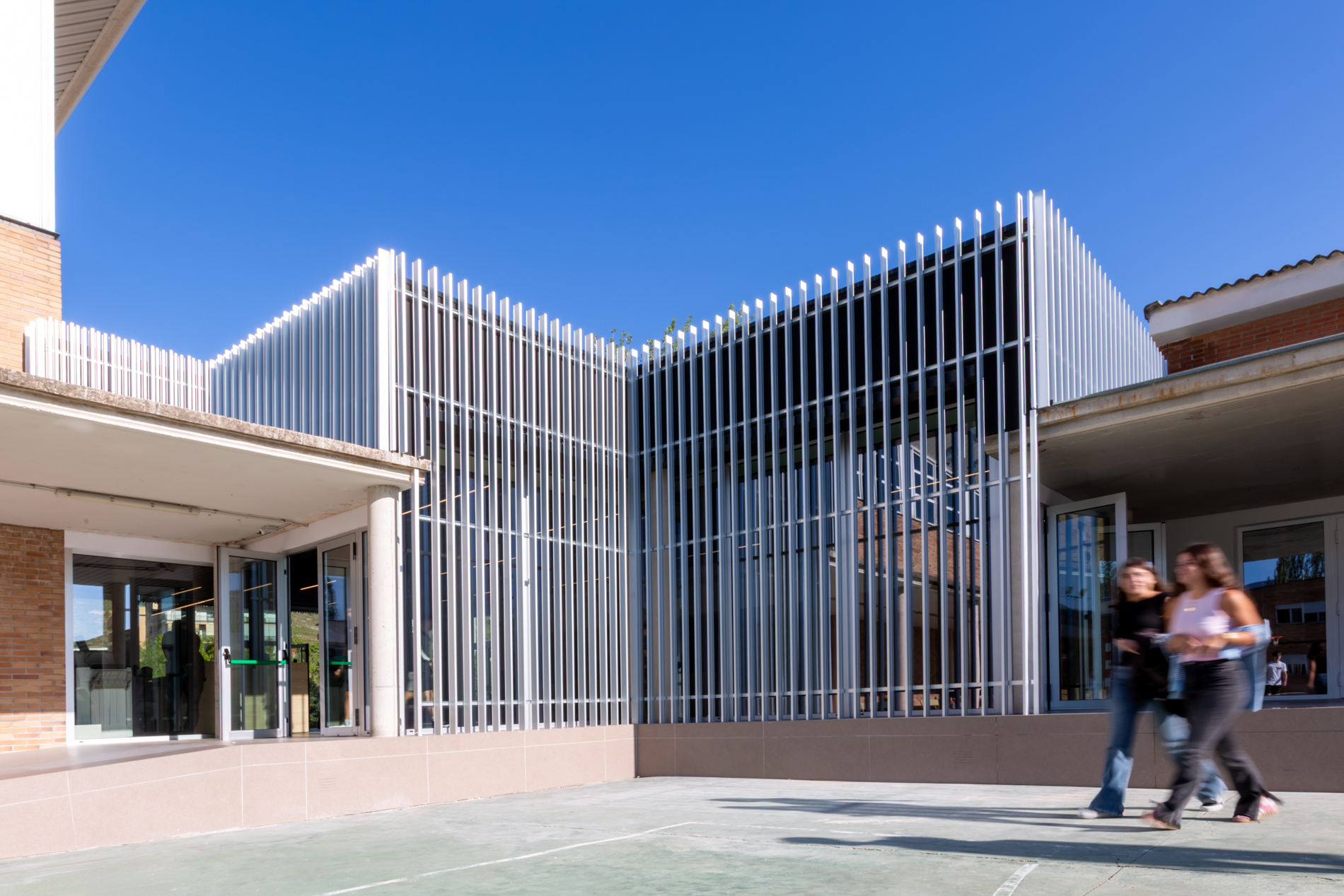
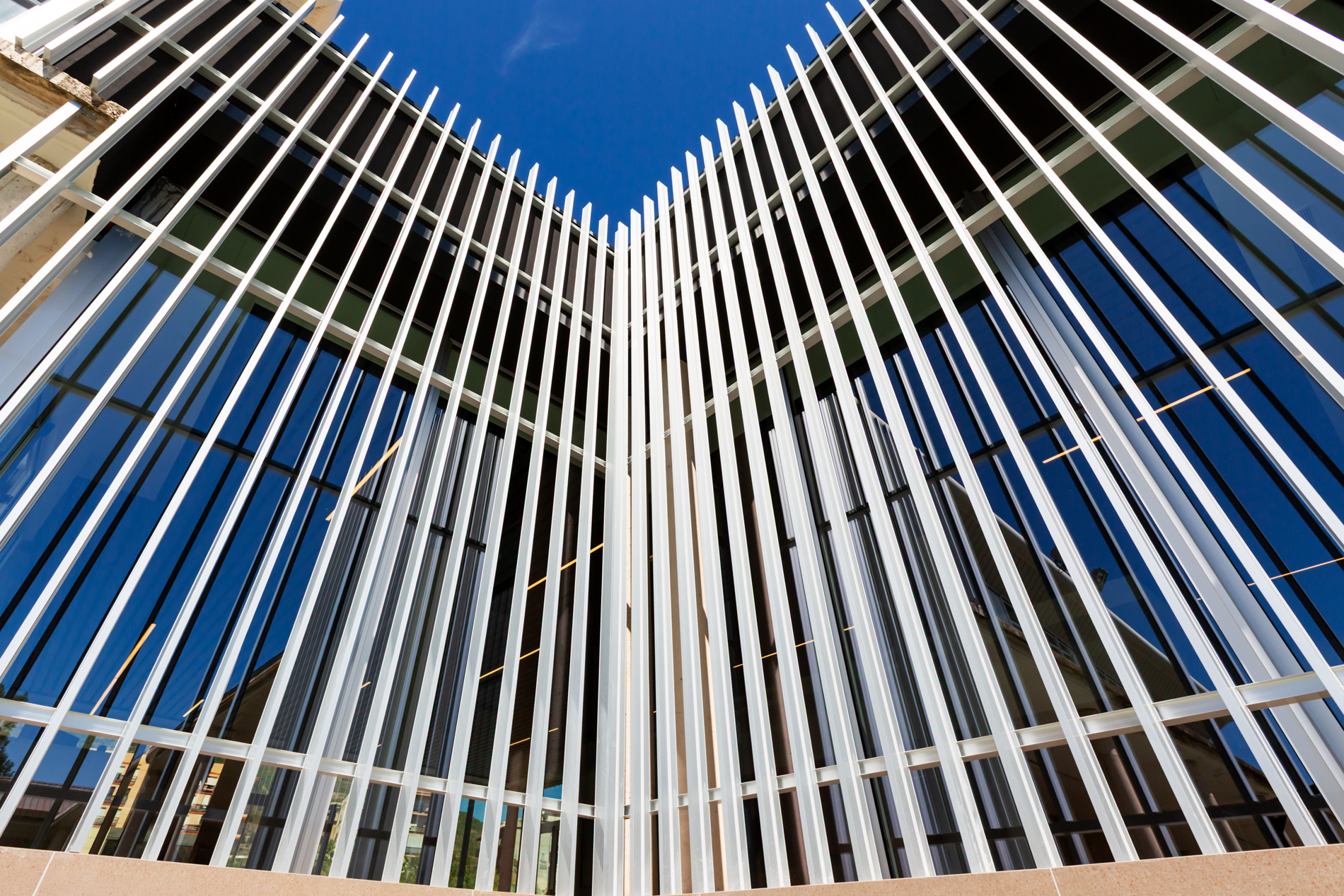
More recently, in the renovation of the IES Cotes Baixes secondary school in Alcoi (Alicante), our V-shaped louvres protect and shade the new common areas of the centre, which has been recognised as Excellent by the Ministry of Education.
The commitment to sustainable educational architecture also extends beyond our borders, as demonstrated by the installation of R4-200 Louvers at Baimbridge Secondary School in the Guadeloupe region, where they protect dining rooms and recreation areas in a particularly demanding climate.
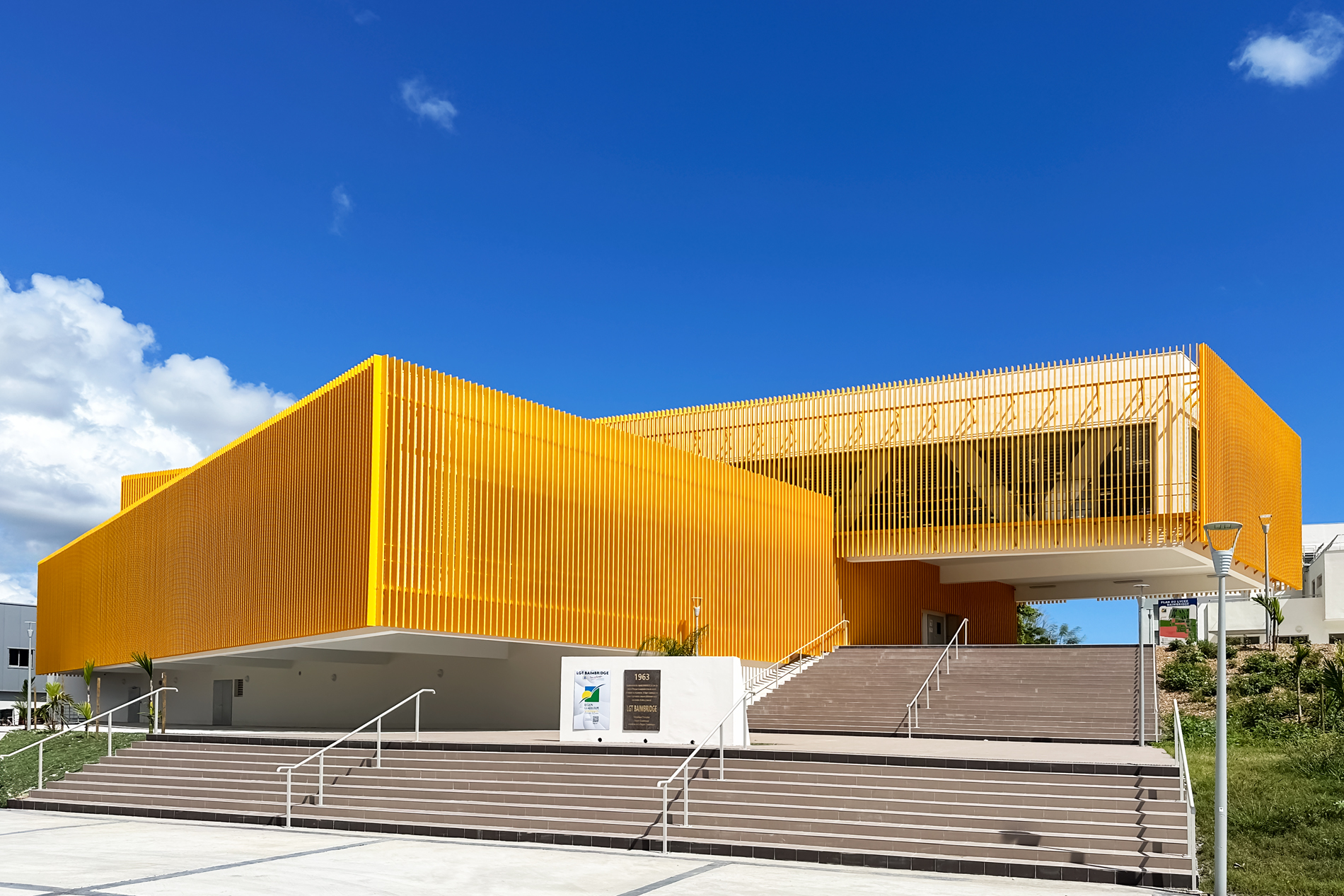
More and more schools are becoming aware of the importance of integrating these types of solutions to improve comfort in their classrooms.
As specialists in solar control for architecture, we work to promote the prescription of solar protection solutions in new construction and renovation projects, especially in view of the ageing of the current educational facilities, thus contributing to the creation of spaces of well-being at the service of education.
 You may also like
Contact us, we will be happy to help you