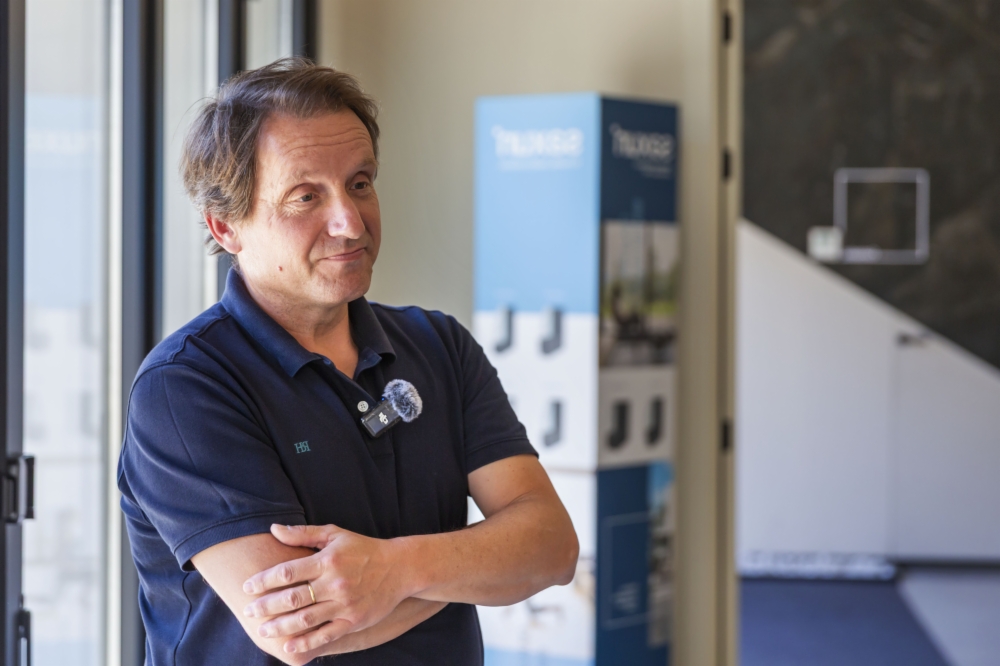


We spoke to Carlos Pérez Carramiñana, a lecturer and researcher at the University of Alicante, about the importance of incorporating natural light from the very start of a project and training the professionals of the future to design spaces that are more comfortable, efficient and resilient to climate change.
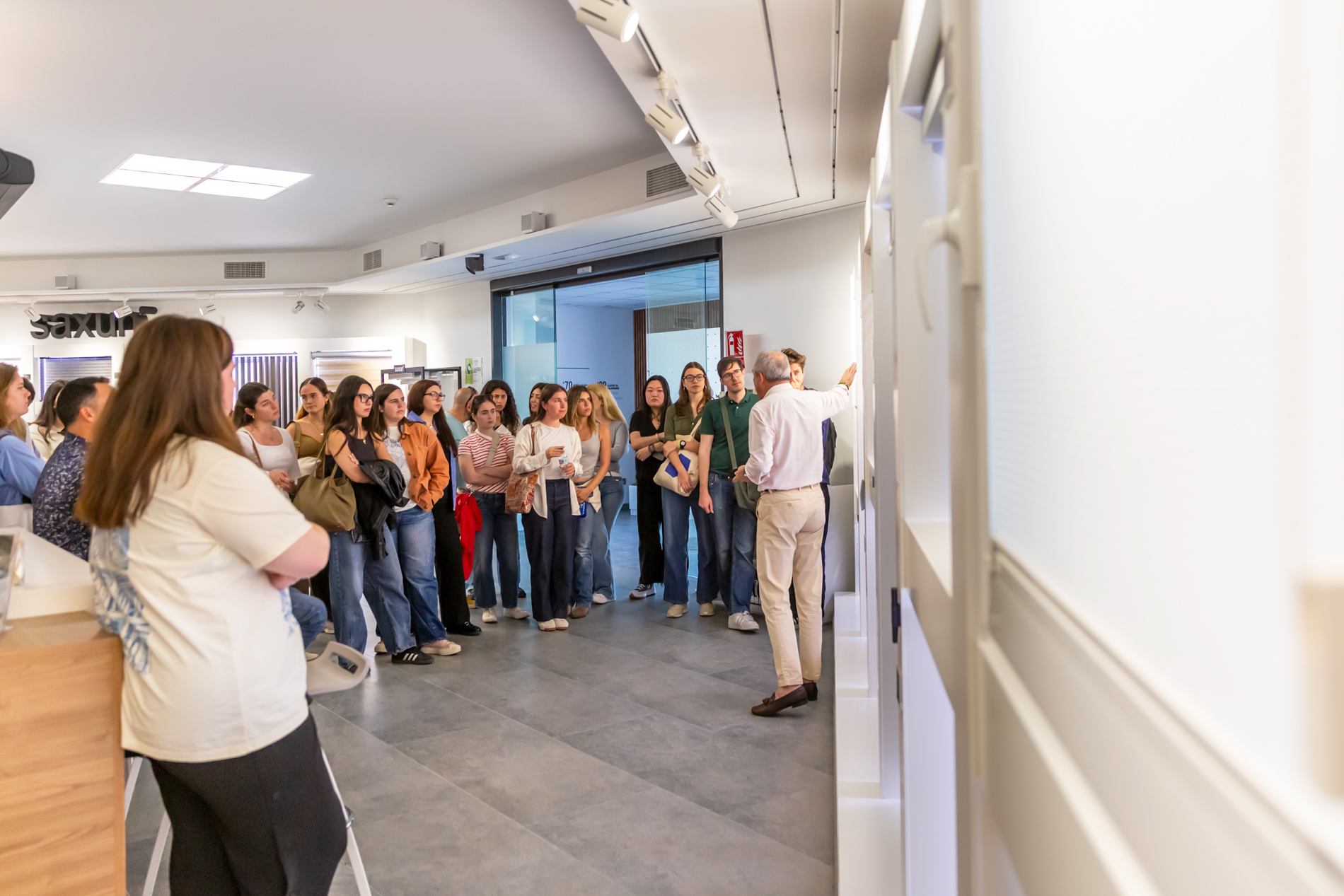
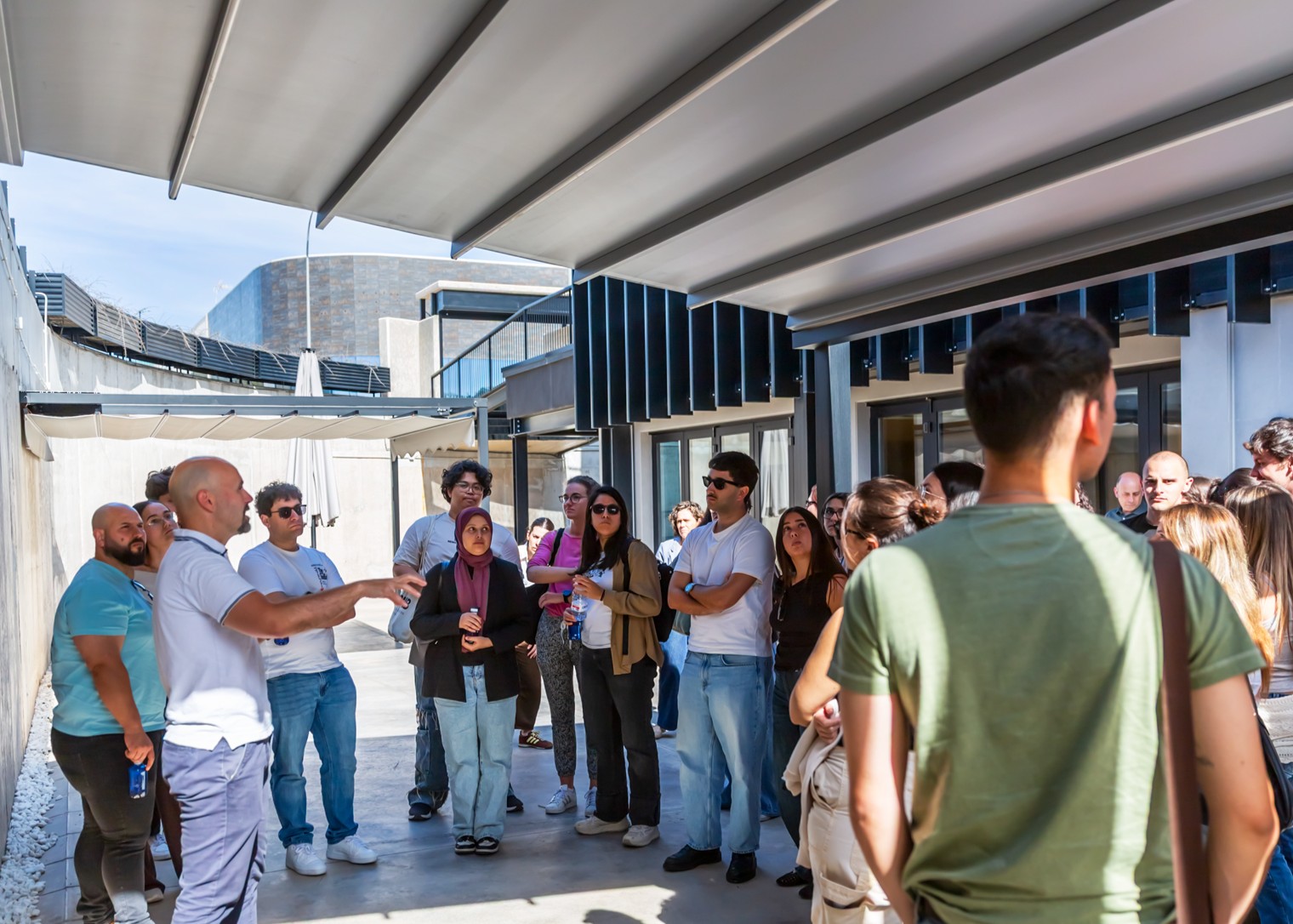
Carlos Pérez Carramiñana, a lecturer and researcher at the University of Alicante (UA), visited Saxun as part of the partnership between the Spanish Association of Shading and Dynamic Solar Control Companies (AESSO) and the UA’s Bachelor’s Degree in Architecture. The visit provided an opportunity to share knowledge and explore the role of solar protection in designing more comfortable and efficient spaces.
During his visit, we discussed training, research and the key role that natural light plays in architectural design. His expert insight reinforces a clear idea: understanding the sun means understanding how to create spaces that are more comfortable, efficient and prepared for the future.
Q. What educational value do academic visits on the Architecture degree course offer to future professionals?
A. We are in the final year of the degree programme, and we believe it is essential for students to understand the enormous influence the sun has on architecture. Its impact is set to grow in the coming years, particularly in terms of the energy performance of buildings and the ability to ensure comfortable and energy-efficient homes.
Furthermore, based on my 16 years’ experience as a technical adviser at the Institute of Architects, I have found that this remains a largely unfamiliar subject, not only among students but also among many practising professionals. That is why this training is essential both at university and in the professional world.
Q. Why does sun protection remain a key challenge in contemporary architecture?
R. This is because most professionals have not yet fully grasped the impact of solar radiation on the energy performance of buildings. Without this knowledge, it is very difficult to design spaces that are truly efficient and comfortable.
Solar radiation is becoming one of the most decisive factors in the energy performance of buildings, and its importance is set to grow exponentially due to climate change. This means that architecture must adapt and respond with solutions that ensure spaces are more liveable and future-proof.


Carlos Pérez, lecturer and researcher in the Department of Architectural Structures
Q. How do partnerships between universities and businesses, such as the one between AESSO and the University of Alicante, drive innovation in architecture?
R. Initiatives of this kind are essential. Today’s event is the result of the first agreement between AESSO and a Spanish university – in this case, the University of Alicante – a location of particular significance as it is one of the sunniest regions in Europe.
The approach being developed here can be applied to other areas. Furthermore, projects are being proposed in which students must integrate sun protection systems directly into the architectural design, not as a later addition, but as an essential part of the project.
Q. How is this knowledge being applied in student training?
R. Practical exercises are being proposed in which students must incorporate sun protection as a key architectural element from the very start of the project. This approach is proving very popular, and the results we will see at the end of the academic year will be particularly significant.
Furthermore, these developments will begin to be shared in professional forums, thereby enabling the knowledge generated at the university to be passed on to the sector as a whole.
Q. How can architects incorporate sun protection solutions into their professional projects?
R. Nowadays, architecture is unthinkable without sun protection systems incorporated from the outset. It is no longer a question of adding these elements at the end of the process, but of treating them as a key component of the architectural design.
This approach enables the development of solutions that are more coherent, efficient and tailored to the actual needs of the spaces and the people who use them.
Q. How will healthy buildings of the future be shaped by solar protection and natural light control?
R. The research we are conducting at the University of Alicante points to a significant shift in approach: placing people at the heart of architectural design.
Traditionally, the focus has been on the building itself and its energy efficiency. However, we have found that an energy-efficient building does not necessarily guarantee user comfort. On the other hand, when the design focuses on people’s well-being, the result is also an energy-efficient building.
This shift in perspective completely transforms the way we design. The buildings of the future will need to be able to adapt to their surroundings, manage solar radiation intelligently and create spaces that are healthier, more comfortable and better equipped to meet the challenges of climate change.
 You may also like
Contact us, we will be happy to help you