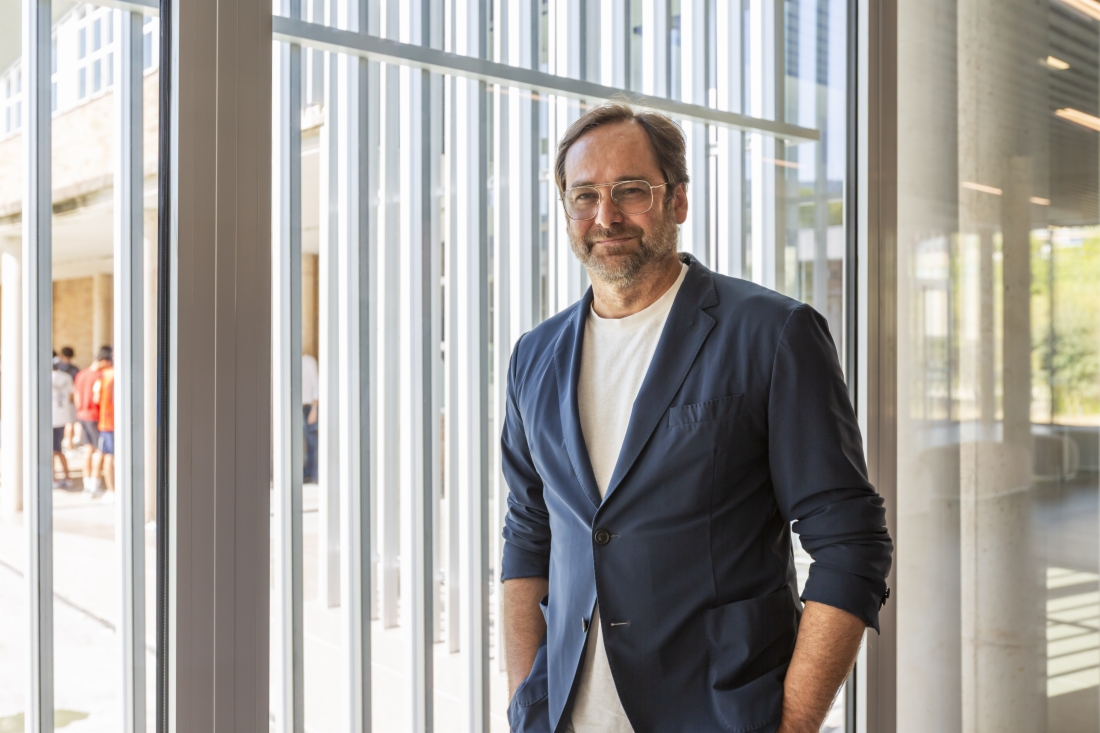


The refurbishment of the IES Cotes Baixes secondary school in Alcoi demonstrates how architecture can support new educational models. Alberto Martínez, creative director at Venture Experience, reflects on the role of spaces in wellbeing, learning and the development of talent.
Architecture is no longer understood solely in terms of functionality. Every space conveys a way of thinking, reflects a culture and shapes the experience of those who inhabit it.
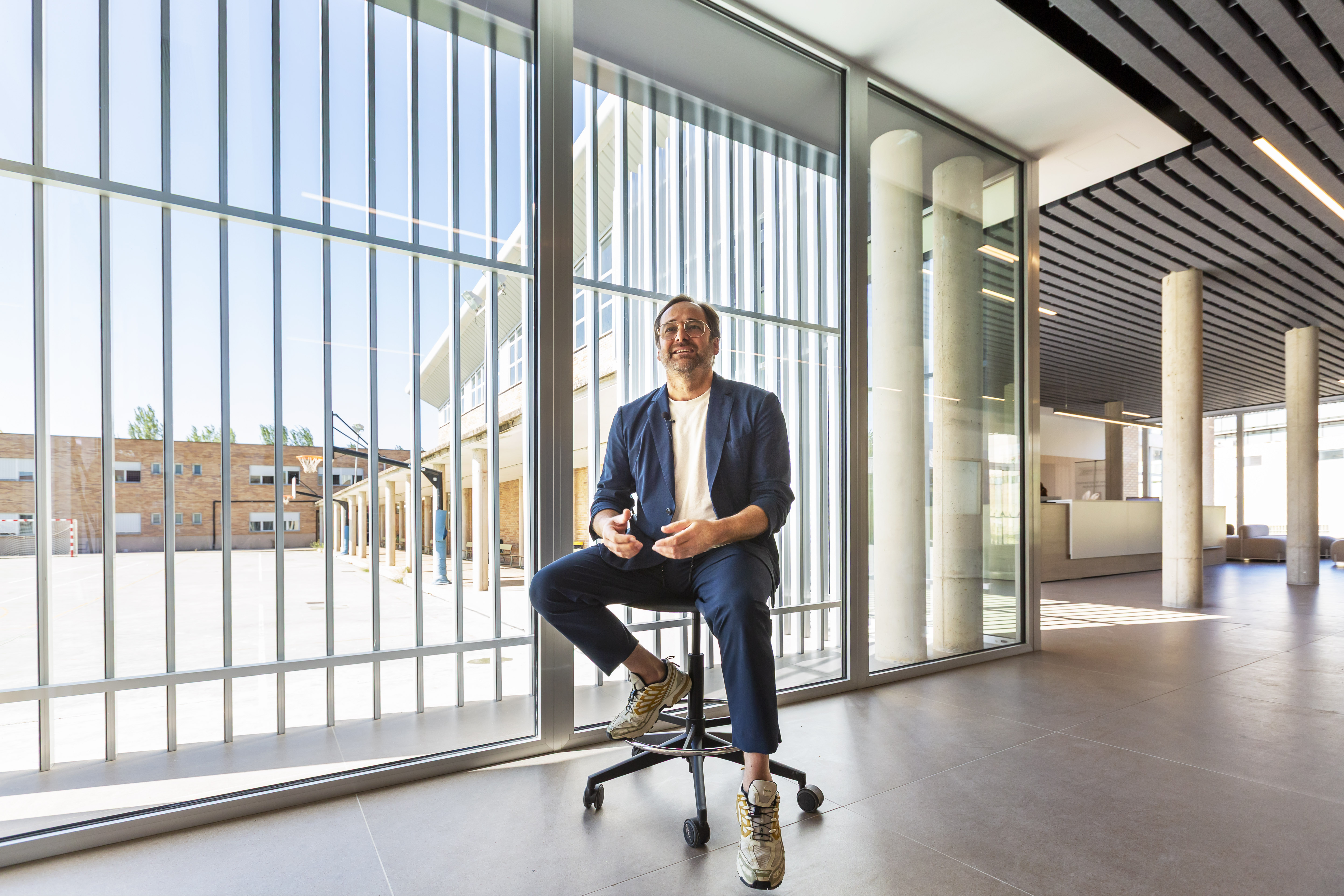
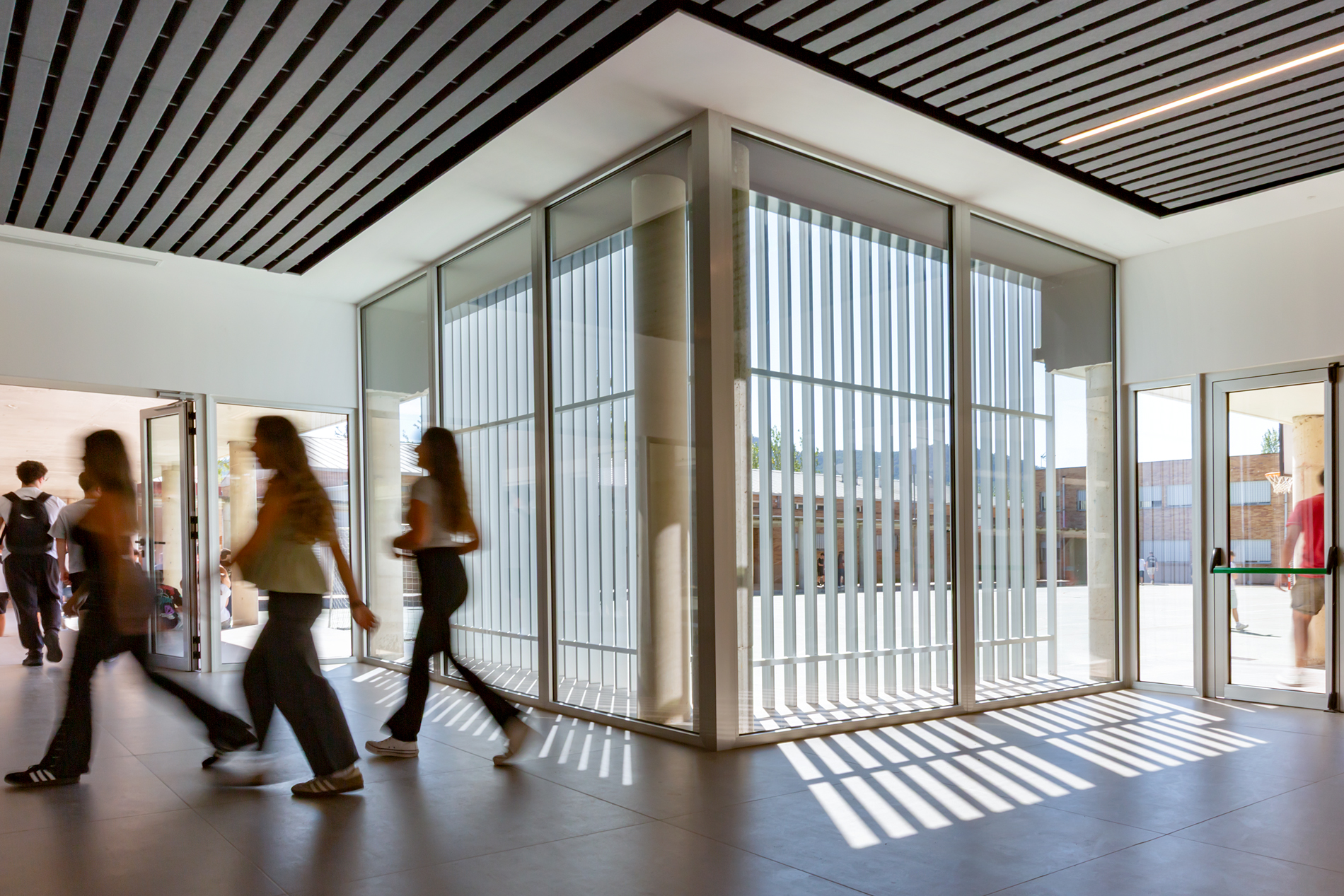
This vision has guided the refurbishment of IES Cotes Baixes in Alcoi, a Centre of Excellence for Vocational Training, which has transformed its classrooms, communal areas and circulation routes to promote natural light, well-being and creativity. Venture Experience was involved in the design of the project, whilst Saxun contributed by installing V-50 and V-90 LED louvres, solutions that help control the amount of natural light entering the building, reduce solar gain and improve the comfort of the spaces.
In this interview, Alberto Martínez, Creative Director at Venture Experience, explains how the Space UX methodology enables an organisation’s values and objectives to be translated into the physical environment. It is a people-centred approach aimed at creating spaces that are more coherent, comfortable and equipped to foster new dynamics.
Q. Is our understanding of spaces changing?
A. There is a growing movement that is leading us to value experience over material possessions. At the same time, new ways of educating, learning and developing talent are emerging.
The Space UX methodology enables us to bring together conceptualisation and thinking from different disciplines. In some ways, it is similar to the process of creating a website: before designing it, we analyse what we want to achieve, what the objectives are, what happens when a person performs an action, and how the environment should respond.
From there, we set out the strategic guidelines for the project and began to develop its narrative.
Q. How is that methodology applied to the design of a physical space?
A. Rather than simply designing spaces, we design small moments. Each one serves specific objectives and reflects the values the organisation wishes to convey.
When these moments come together, a powerful narrative emerges that can be translated into the physical space. Interior designers and architects thus have a more solid conceptual foundation on which to develop the project.
Their knowledge, creativity and understanding of architecture are integrated more deeply into the final result. The design is no longer merely a response to a layout or technical requirements, but begins to express a way of thinking.
Q. How did your involvement in this educational project begin?
IES Cotes Baixes in Alcoi is a school of excellence. They invited us to find out about their project and to share our vision. Right from the start, we discovered an extraordinary and unique approach to education. They asked us how to translate that philosophy into the space and how to ensure that the educational model and the building’s design evolved in parallel.
Space UX focuses specifically on the user experience within spaces. That is why we were able to rethink the project based on the way people teach, learn and interact.
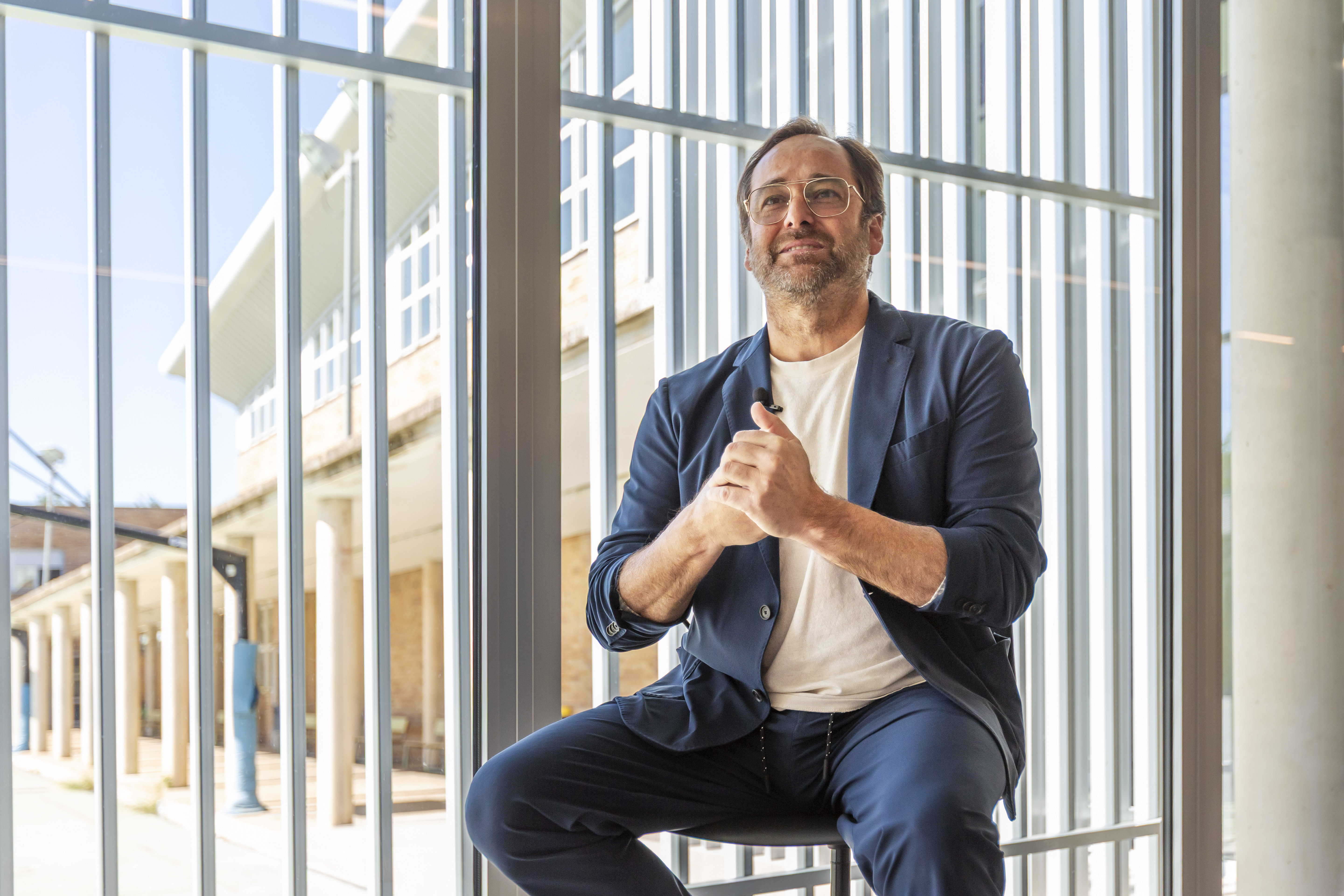


Alberto Martínez, Creative Director at Venture Experience
Q. What has made this work particularly interesting?
We’ve really enjoyed it because it goes beyond simply improving architectural aspects such as energy efficiency, functionality, circulation and regulatory compliance.
There is a spirit that runs through the whole project. A way of thinking. The real challenge was to ensure that this educational philosophy was also reflected in the building.
For us, it has been an opportunity to demonstrate that things can be done differently and that the Space UX methodology can be applied with tangible results.
Up until now, we have been explaining this approach, and at times it may have seemed somewhat intangible. In this project, it has become a reality that can be observed and experienced through people and spaces.
Q. What role does light play in the well-being of indoor spaces?
There are professionals who are able to completely transform a space using only light.
Apart from artificial lighting, there are solutions and architectural features that allow natural light to be filtered and indoor conditions to be adapted to the needs of the moment.
It is surprising to see just how much can be achieved with seemingly simple resources. It is not just a matter of blocking or controlling solar radiation. It is about creating more pleasant, comfortable and suitable environments for the people who use them.
Q. Which sectors should take a closer look at their users’ experience?
Sectors such as education and healthcare need to carry out a thorough review of the experiences they provide.
A new way of understanding these sectors is beginning to take shape. The word ‘experience’ is used a great deal, but what is truly interesting is observing how people behave: where they sit, which places they choose, how they move about, and how they interact with one another.
Spaces can function intelligently and foster certain dynamics. They can help people come together, work together and feel free to create, learn and develop their talents.
Q. Can a building really influence the way we learn?
A. Yes. A well-designed space can foster more enriching interactions and create better conditions for learning, collaborating and sharing knowledge.
A great deal of groundwork is evident in this project. When we arrived, we found the framework of a centre where many people had already reflected on, experimented with and put new ideas into practice.
It is as if the school itself were undertaking a never-ending PhD: it puts itself to the test, tries out new approaches and always keeps the focus on the student.
That approach is brilliant and is making her a pioneer of a new way of understanding education.
Q. Do you think Spain could be a pioneer in this new approach to designing spaces?
A. Spain has an attitude to life and a vision of quality of life that can be applied to education, healthcare, tourism and many other areas of everyday life.
If we can read between the lines, we will see that a very interesting educational culture is emerging. We must observe it, listen to it and support it, including through the design of spaces.
 You may also like
Contact us, we will be happy to help you